
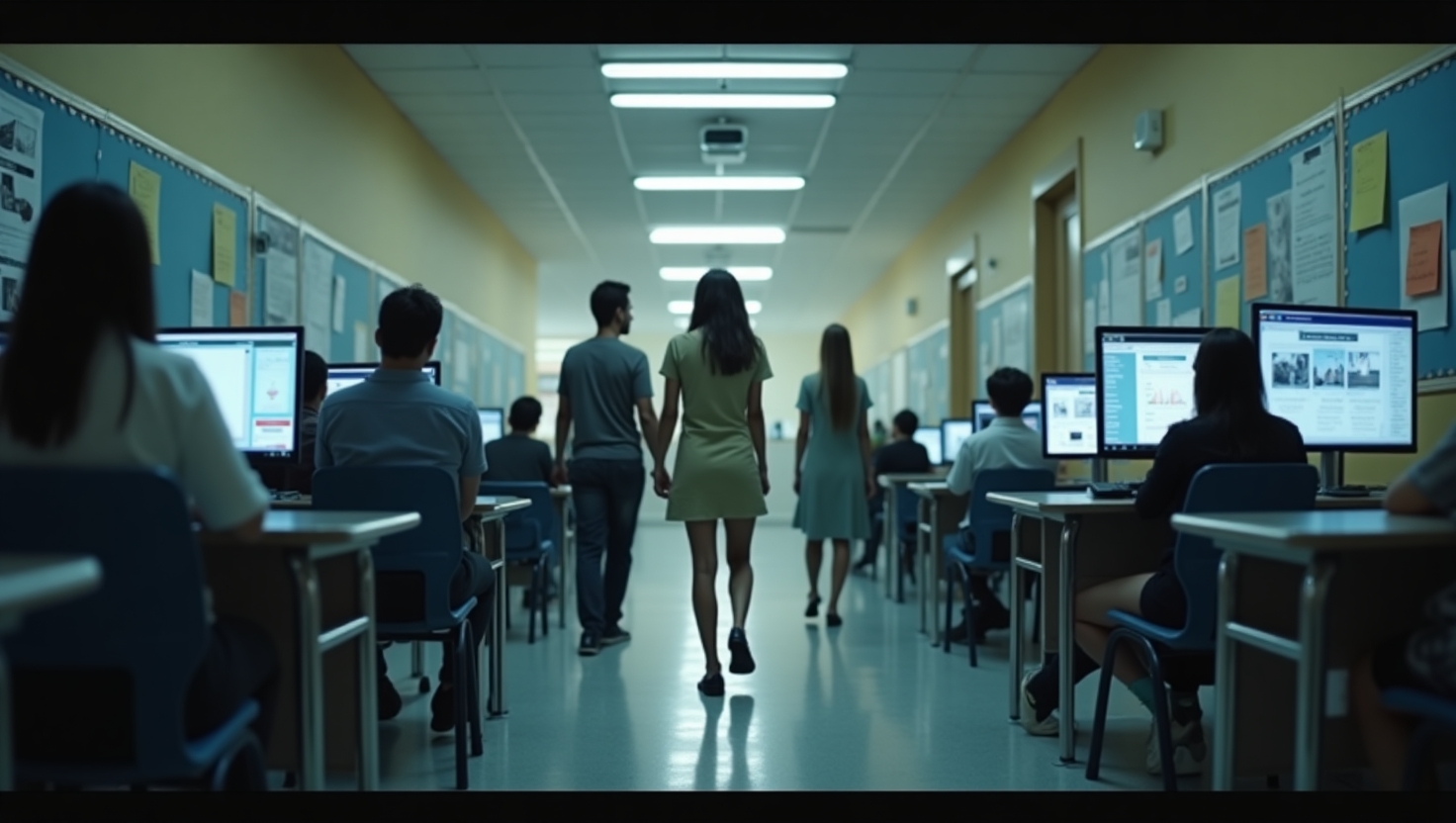
AI in School Security
Introduction
In an era where safety and security are paramount in educational environments, the deployment of AI in school security has sparked both optimism and controversy. As AI systems become increasingly sophisticated, they promise to bring revolutionary changes to security technology, elevating the standards of school safety while challenging conventional security measures. However, as recent incidents have demonstrated, the integration of AI in these sensitive areas may not be as flawless as hoped. While AI holds the potential to transform our understanding of security, it also presents unique challenges—false alarms being one of them. These dual realities make AI both a savior and a source of new complications.
Background
The journey of AI systems within security technology began as a quest to automate and enhance existing safety protocols. As AI advanced, so did its application in schools, particularly concerning the monitoring of student safety and prevention of incidents. Over time, schools have embraced AI-driven cameras and real-time threat detection systems as formidable allies in ensuring environmental safety. Amid success stories, such as thwarting potential incidents, there have also been notable failures. A historical analogy could be the adoption of metal detectors in airports: revolutionary in preventing threats but initially critiqued for false positives. Similarly, the AI systems’ ability to balance efficiency with decision accuracy is still a work in progress.
Current Trends
The landscape of school safety is rapidly evolving thanks to AI systems that bring unprecedented capabilities to the table. Real-time monitoring and automatic threat detection are now more prevalent than ever, ushering in a new era of proactive school security measures. Schools in various districts have adopted AI to streamline their security protocols, as noted in cases where AI identified unauthorized persons or potential threats on campus swiftly. A key statistic to consider is the projected growth rate of AI in security technology, expected to reach $37 billion by 2025. This widespread adoption indicates that educational institutions are not just experimenting but are committed to integrating these novel technologies into their daily operations, hoping AI will provide a failsafe mechanism against unforeseen threats.
Insights from Recent Incidents
Yet, the question remains: how effective are these AI systems when their accuracy is paramount? Consider a recent incident involving a high school in Maryland, where an AI security system misclassified a harmless Doritos bag as a potentially dangerous firearm. This overly sensitive detection not only resulted in a false alarm but also led to the student, Taki Allen, being unjustly detained and searched—triggering a cascade of unnecessary actions by school security and local law enforcement (source: TechCrunch). This case underscores a critical flaw: AI’s struggle with contextual understanding, leading to misinterpretation and raising questions about the reliability of AI detection technologies. The impact of such false alarms is profound, raising concerns about the emotional and psychological effects on students, as well as eroding trust in these technologies.
Future Forecast
Looking ahead, it’s essential to ponder how AI will further evolve to address these issues. It’s plausible that future iterations of AI in school security will harness advanced machine learning techniques to drastically reduce false alarms, creating systems that better understand context and nuance. The integration of human oversight—acting as a failsafe layer—is likely to become a staple in these environments, bridging the gap between sophisticated AI capabilities and human intuition. We can foresee AI and human teams working in tandem, ensuring robust, reliable, and effective school safety systems that don’t compromise on accuracy or student welfare.
Call to Action
For those invested in the safety of our educational institutions, it’s time to engage in meaningful dialogue about the future of AI in school security technologies. We must advocate for informed implementation strategies that involve comprehensive testing and regular reviews to adapt to evolving security contexts. By doing so, we can ensure that AI becomes a reliable partner rather than an unpredictable enigma in the quest to protect our schools.
Encourage ongoing vigilance, stay informed, and partake in conversations about AI in school security to shape a future where safety technology works seamlessly to protect our students while reinforcing their educational sanctuaries.