
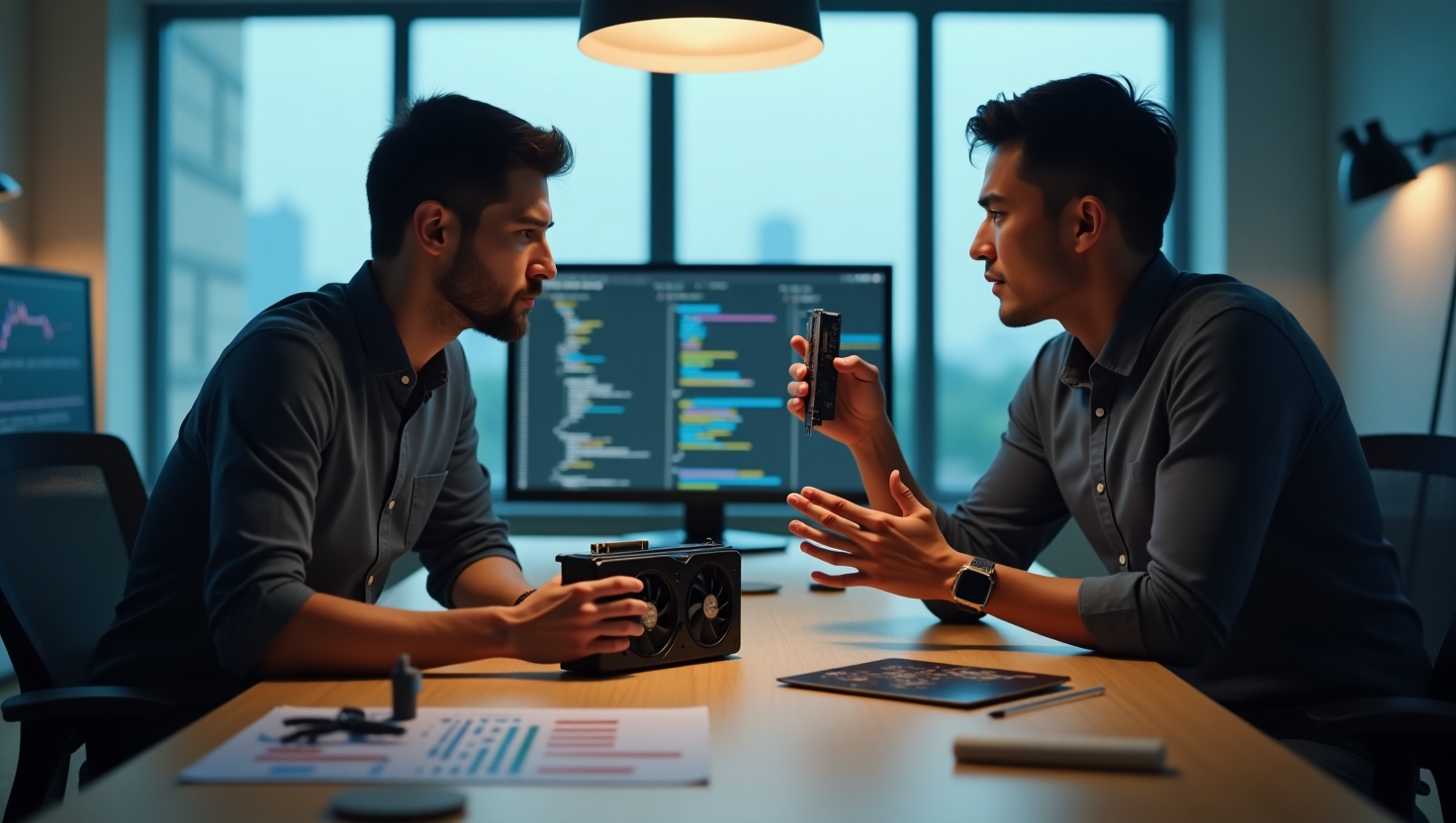
Nvidia vs Huawei: The Future of AI Hardware and GPU Technology
Introduction
In the ever-evolving landscape of artificial intelligence, hardware plays a pivotal role in determining the speed and efficiency with which AI models can process data and execute tasks. Nvidia and Huawei stand at the forefront of this technological race, each redefining the capabilities of AI hardware. Nvidia has long been the leader in GPU technology, catering predominantly to AI developers worldwide. In contrast, Huawei has emerged as a significant contender, reshaping the dynamics with its own advancements. As we delve deeper into this narrative, understanding the nuances between the offerings of these two giants becomes vital, especially amid the shifting paradigms in AI supply chains.
Background
Nvidia’s dominance in GPU technology dates back to the early 2000s, where its focus on high-performance graphics chips laid the groundwork for AI enhancements. Driven by robust design and innovation, Nvidia’s GPUs are ubiquitous in AI model development, akin to the Intel-Amd rivalry but more centered in AI. However, Huawei’s recent advancements in AI hardware have caught the industry’s attention, presenting it as a formidable competitor. Huawei’s move into AI is highlighted by its development of the Ascend NPU, which mirrors the technological leap akin to David challenging Goliath. Despite fundamental differences in architecture—Nvidia relying heavily on graphics versatility while Huawei emphasizes neural network prowess—both exhibit significant breakthroughs in pushing AI hardware capabilities forward.
Current Trend in AI Hardware
There’s an intriguing trend manifesting in AI hardware, with some companies shifting from Nvidia to Huawei—especially noticeable among Chinese firms like ByteDance. Huawei’s strategical development of robust AI supply chains positions it as a viable alternative. For instance, ByteDance’s transition to Huawei exemplifies how Huawei’s offerings present advantages in performance efficiency and cost-effectiveness. Huawei’s systems promise direct improvements, akin to choosing bullet trains over steam engines for speed and efficiency—their SuperPod clusters offer data links ’62× quicker’ (source: AI News). Nonetheless, this migration isn’t without inherent risks and challenges, from adapting systems to aligning with regulatory standards.
Insights into the Migration Process
Transitioning from Nvidia to Huawei isn’t merely an upgrade but a comprehensive transformation. Challenges abound, ranging from technical re-engineering of workloads to the significant retraining of staff. One can liken this migration to shifting from driving petrol cars to electric vehicles—it requires not just a change in technology but also in user habits and infrastructure. A notable example being one Chinese firm needing approximately 200 engineers and six months to port a model from Nvidia to Huawei, achieving about 90% of previous performance (source: AI News). The trade-offs between performance efficiency and the adaptation process are balanced intricately in this technological shift.
Forecast for the Future of AI Technology
The future of AI hardware is poised on a knife-edge, balancing innovation and geopolitical factors prominently. Huawei must navigate these waters carefully—securing market credibility without getting entangled in regulatory constraints. The emergence of other potential entrants in the AI hardware space will further diversify and challenge existing power structures. Predictions suggest increased global demand for AI solutions will drive both Nvidia and Huawei to push boundaries even further. As time progresses, the landscape may witness new collaborative models and technological ecosystems, reshaping the AI hardware industry.
Call to Action
As the battle for AI hardware supremacy intensifies between Nvidia and Huawei, it becomes essential for organizations to critically evaluate which path aligns with their strategic objectives. Huawei’s rapid advancements suggest a promising opportunity; however, weighing up not just the technical pros and cons but also geopolitical considerations is paramount. For more insights into AI hardware trends and innovative technologies, subscribing to our updates might be a prudent next step. For those interested in an in-depth discussion, further readings are available in related articles, exploring the opportunities and trade-offs involved in the migration from Nvidia to Huawei.
—
Explore these dynamics deeper by visiting this article, which provides a closer look at Huawei’s rising influence and the associated challenges businesses face in this technological shift.