
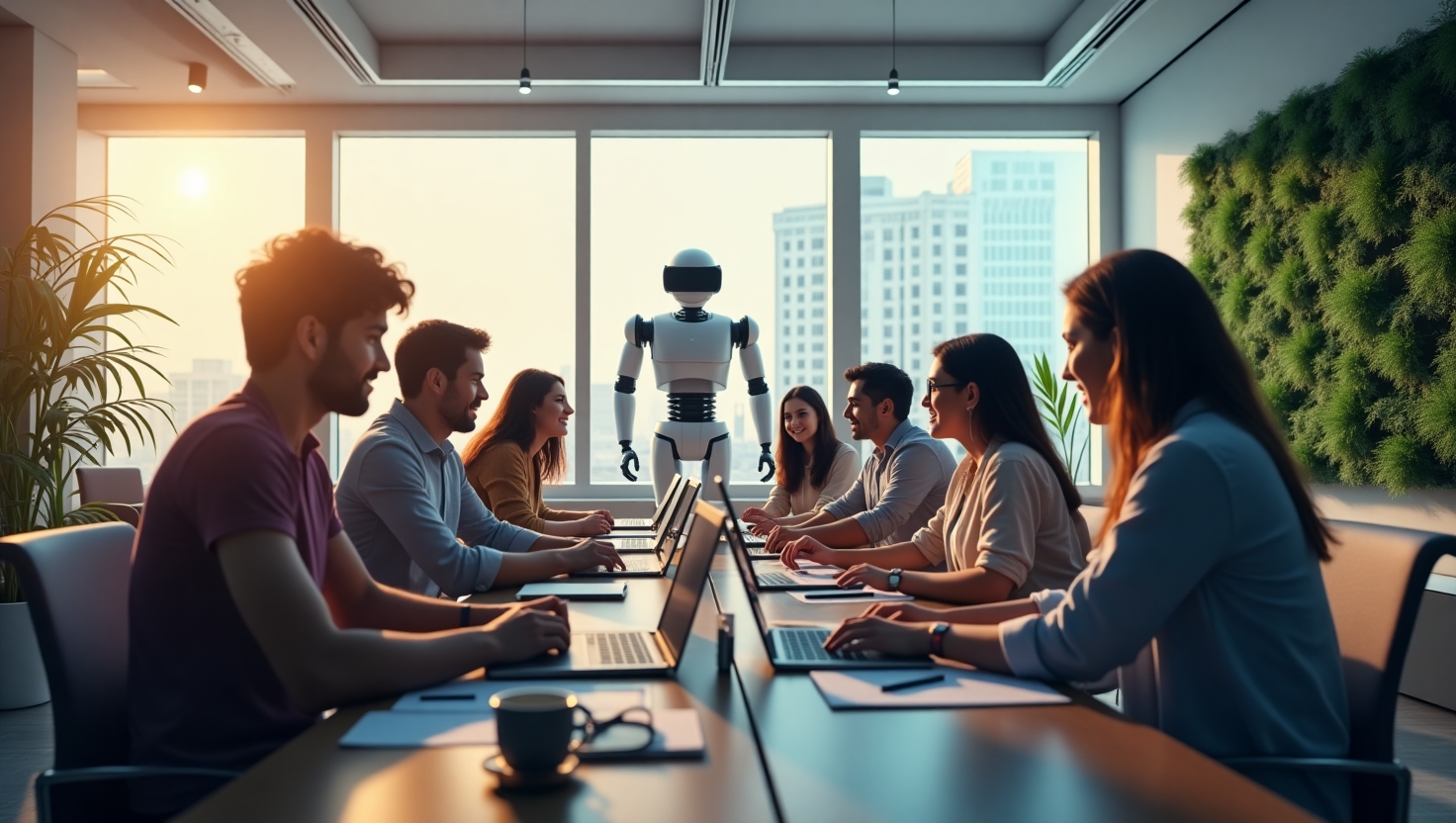
AI Workplace Culture: Navigating Diversity and Inclusion Strategies in a Tech-Driven Era
Introduction
In today’s fast-paced world, the incorporation of Artificial Intelligence (AI) is fundamentally reshaping workplace culture. The integration of AI tools not only optimizes efficiency but also introduces novel diversity and inclusion strategies that enhance the employee experience. As companies navigate this tech-driven landscape, they are compelled to reevaluate their core cultural frameworks to ensure inclusivity and leverage the full potential of a diverse workforce.
Background
To truly grasp the essence of AI workplace culture, one must delve into its origins and evolution. Initially viewed as mere technological advancements, AI tools have transcended their conventional roles to become reflections of a company’s ethos. These tools influence employee dynamics, communication patterns, and ultimately, organizational productivity. An analogy can be drawn to a symphony orchestra where AI acts as a new musical instrument. Its successful integration requires a harmonious balance with existing instruments (i.e., human workers) to produce a symphony that is greater than the sum of its parts.
Historically, the adoption of AI in the workplace has been sporadic with varying impacts on diversity and inclusion. However, successful implementation contributes significantly to improved employee collaboration and engagement, fostering a culture that accepts diverse perspectives.
Current Trends
The recent AI boom has catalyzed a shift toward more diverse and inclusive workplace practices. Major technology conglomerates such as Google and Amazon are at the forefront, leveraging AI to enhance workforce diversity and redefine employee experience standards. For instance, Google employs machine learning algorithms to mitigate biases in hiring processes, thus broadening the spectrum of talent they acquire.
Moreover, AI tools are increasingly being utilized to identify and address potential cultural gaps within organizations, enabling leaders to design more inclusive strategies. According to a recent study, these tools allow for a deeper understanding of employee satisfaction and engagement, leading to more tailored and effective inclusion policies. However, the uneven adoption of generative AI across industries highlights a disparity. While leaders like Meta project significant integration of AI in their operations, many companies still struggle to realize positive returns from AI projects Richard Waters, Daron Acemoglu, Meta.
Insights from Industry Leaders
Industry insights reveal a profound disparity in AI adoption and effectiveness. Companies such as Meta continue to push forward with extensive AI integration, anticipating significant portions of their operational processes, such as coding, to be AI-driven in the near future. Conversely, a vast number of generative AI projects across other industries have yet to yield substantial returns.
Recent studies underscore the importance of investing not just in AI technology but in the necessary infrastructure and (re)training of employees to truly unlock productivity benefits David Rotman, Erik Brynjolfsson. This speaks to a broader trend—AI can significantly enhance workplace culture, but only when integrated with a well-rounded strategy.
Future Forecast
Looking ahead, the future of AI workplace culture appears poised for transformative growth. As AI technologies become more sophisticated, they will likely play a crucial role in developing dynamic diversity and inclusion strategies. The anticipation is that AI will facilitate a more personalized employee experience, recognizing and valuing the unique contributions of each individual, thus fostering a more inclusive work environment.
Moreover, as organizational leaders continue to learn from industry pioneers and sidestep initial adoption hurdles, the integration of AI tools is expected to advance significantly. The forecast includes a trajectory wherein AI augments the workplace culture profoundly, enhancing inclusion by recognizing individual potential and minimizing bias in decision-making processes.
Call To Action
We invite you to engage with us! How is your organization embracing AI to foster a better workplace culture? Share your strategies for diversity and inclusion in the comments, and let’s learn from each other’s experiences to build a future-ready workforce.
Related Articles:
– AI boom benefits construction industry
– State of AI
By addressing these dynamic changes proactively, companies can harness the power of AI to foster workplace cultures that are not only diverse and inclusive but also uniquely tailored to the evolving demands of the modern workforce.