
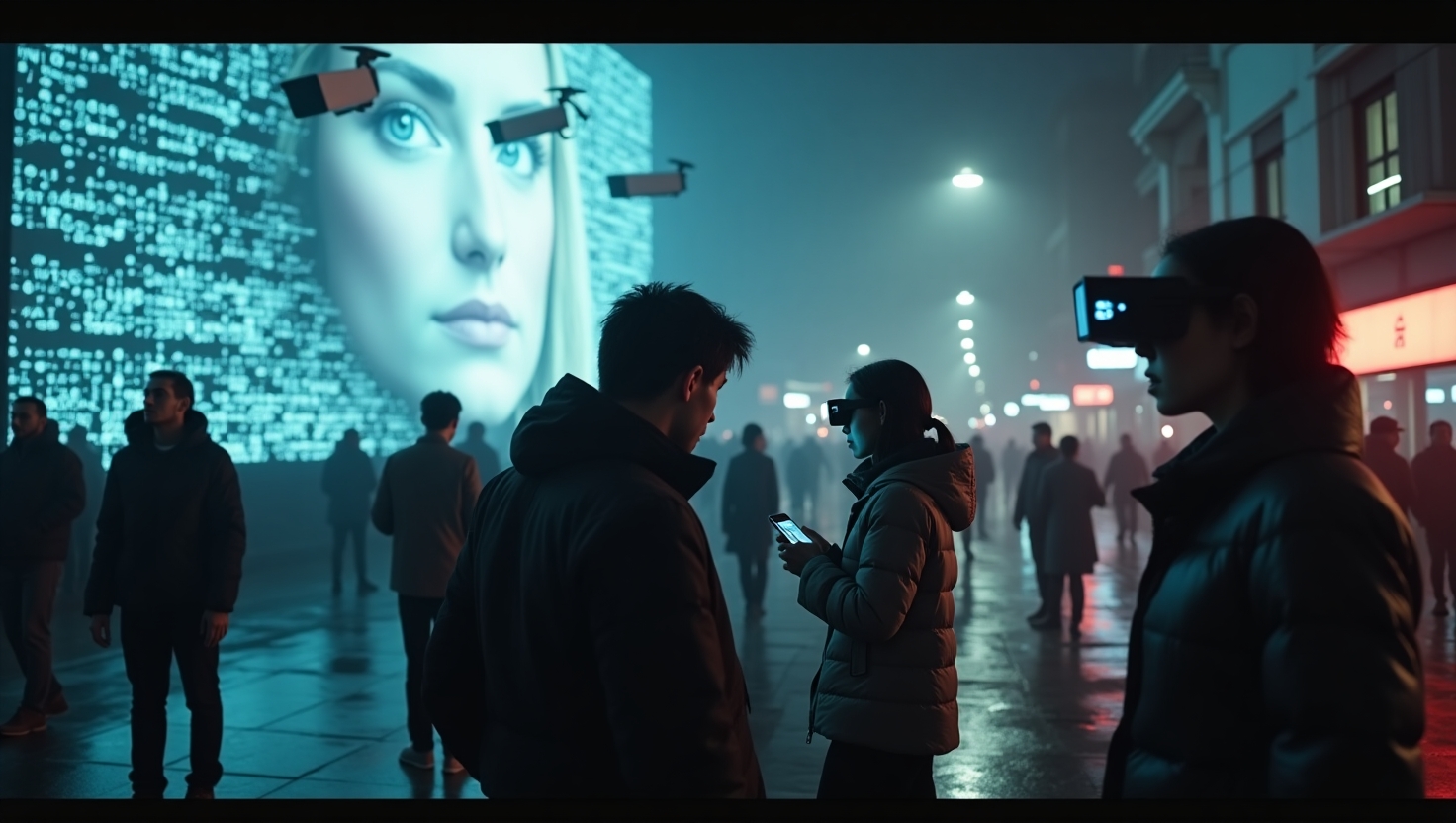
Understanding the Risks of AI Surveillance
Introduction
Welcome to the brave new world where artificial intelligence entwines with the art of vigilance, birthing a controversial yet ubiquitous reality—AI surveillance. This symbiotic relationship promises unprecedented security measures but harbors a Pandora’s box of ethical conundrums and AI surveillance risks. These technologies project an Orwellian future, where the echo of George Orwell’s \”1984\” whispers deeper anxiety into discussions of data privacy and personal freedoms. Navigating these nuanced debates is essential for consumers and organizations who stand on the precipice of a surveillance-induced identity crisis.
Background
The evolution of AI surveillance resembles a high-stakes chess game where tech giants like Securus Technologies play both defender and aggressor. Their avant-garde technology eavesdrops into the sanctums of inmate communications, trained on troves of prison phone calls to anticipate and foil nascent crime plans (https://www.technologyreview.com/2025/12/01/1128591/an-ai-model-trained-on-prison-phone-calls-is-now-being-used-to-surveil-inmates/). This metamorphosis in surveillance, ostensibly virtuous, casts a shadow on workplace ethics. Bianca Tylek poignantly critiques this \”coercive consent,\” where inmates are cornered into compliance, their calls dissected without recourse. This embodies an ethical quagmire—mirroring an Orwellian dilemma of perpetual watchfulness versus individual autonomy (https://www.technologyreview.com/2025/12/01/1128591/an-ai-model-trained-on-prison-phone-calls-is-now-being-used-to-surveil-inmates).
Current Trends in AI Surveillance
Imagine a world where digital sentinels never sleep—where AI companies, like Flock, shroud city landscapes in invisible nets of digital surveillance. Their reliance on gig workers from distant locales like the Philippines to sift through American surveillance footage introduces an unsettling postcard from the future, illustrating the complex employee monitoring matrix and confidentiality concerns (https://www.wired.com/story/flock-uses-overseas-gig-workers-to-build-its-surveillance-ai/). This paradigm gestures towards a dystopian chessboard where front-line soldiers of privacy are unexpectedly outsourced. Here, data privacy morphs into an arcane sentiment, as opaque hands across the globe decipher bytes of personal narratives, while local authorities access data without the courtesy of warrants.
In-depth Insight
Delve deeper, and a jarring narrative emerges, marred by a lack of transparent user agreements. It mirrors signing a contract written in invisible ink, where the implications become clear as irreparable boundaries are crossed. Insight from experts like Corene Kendrick crystallizes this ethical conundrum. They ponder, \”Are we going to stop crime before it happens because we’re monitoring every utterance and thought of incarcerated people?\” (https://www.technologyreview.com/2025/12/01/1128591/an-ai-model-trained-on-prison-phone-calls-is-now-being-used-to-surveil-inmates). This scenario underscores the coercive clutch of surveillance when unguarded by policy or consent.
Forecast for AI Surveillance Practices
Imagining the future of AI surveillance propels us into a scenario bordered by technology’s infinite potential and its predilection for overreach. As AI creeps deeper into investigative functions, a surge in AI policy and regulatory landscapes is inevitable. Businesses and privacy advocates must prepare to navigate this labyrinthine legal evolution to champion the sanctity of data protection. Should governments heed these cautionary tales, they may craft laws as intricate and unyielding as the technology they govern, playing a foundational role in defining the ethics of tomorrow’s surveillance ecosystem.
Conclusion and Call to Action
Bride and skeptic alike must engage in a vigilant dance to understand the AI surveillance risks overshadowing today’s digital dystopia. This landscape, fraught with dualities, insists upon an active commitment to forging responsible AI policies. We must advocate for transparency in AI deployments and demand that ethics steer the helm of technological advances. Only by scrutinizing privacy infringements and resisting the lull of complacency can we mitigate the ominous depths of unbridled AI surveillance—ensuring technology protects rather than preys upon its users.
Through discussions and decisive actions, a new equilibrium can be struck, one where workplace ethics are upheld and data privacy becomes a robust shield against any form of intrusive exploitation. Through vigilance and discourse, society must rise to these challenges, shaping a digital world where privacy and progress deftly coexist.