
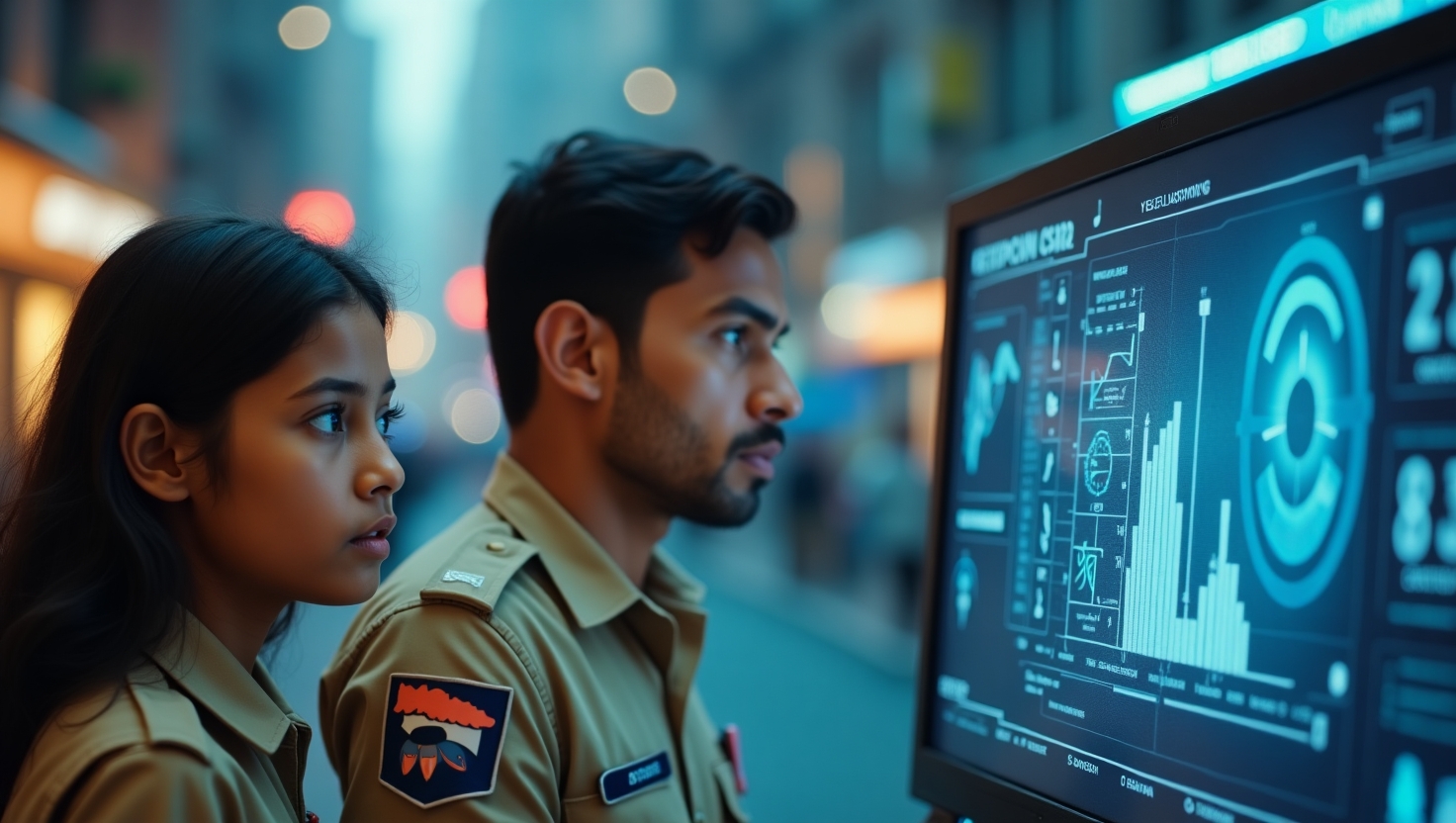
Understanding AI Policing: Transforming Law Enforcement in India
Introduction
In recent years, the burgeoning intersection of technology and law enforcement has reshaped policing paradigms, introducing concepts once confined to science fiction. AI policing in India exemplifies this transformation, fortifying traditional strategies with advanced tools like facial recognition and biometric data systems. As India navigates the complexities of AI integration across its vast and diverse states, understanding the ensuing shifts in law enforcement becomes imperative. This article delves into the role and trends of AI policing, its applications, and its broad implications for the future.
Background
Historically, policing in India has relied on conventional methods: foot patrols, community monitoring, and intelligence gathering. The integration of AI technology signifies a shift toward more data-driven approaches, enhancing precision and operational capacity. Law enforcement technology, especially since the inception of AI, has brought about tools that not only streamline processes but also offer unprecedented levels of accuracy and efficiency. For instance, facial recognition technology allows officers to swiftly identify suspects, while biometric data can link criminal activities with outstanding cases. The dawn of these technologies marks a pivotal transition from reactive policing to a preventative model, aimed at curtailing crime by leveraging AI’s predictive capabilities.
Current Trends in AI Policing
India’s adoption of AI policing is advancing at an accelerated pace. Varying by region, the trend sees states like Delhi and Maharashtra at the forefront, implementing sophisticated AI-based surveillance systems. Facial recognition technology is prevalent across many states, employed in public spaces to enhance security and streamline investigation processes. However, this expansion is not without its concerns. Conversations around biometric data privacy and personal freedom continue to gain momentum, with critics underscoring the thin line between safety and surveillance.
While state-level implementations show promise, as reported by the Delhi Police, which notably solved an ₹80-lakh robbery within 24 hours utilizing AI source, challenges loom large. The debate surrounding AI technologies often parallels that of pharmaceuticals, where a cure may come bundled with side effects. Here, privacy issues, inherent biases, and misinformation are the predominant concerns that law enforcement must address.
Insights from Recent Integrations
With AI’s integration into policing, several states have experienced both triumphs and trials. For example, in Delhi and Maharashtra, AI has revolutionized crime-solving processes, significantly reducing case resolution times. Delhi Police noted enhanced efficiencies, as highlighted by examples of accelerated crime resolution using AI technologies. However, as seen during an incident in Odisha, unreliable infrastructure can hinder efficacy, with only 123 of 275 cameras functional during a stampede source.
Furthermore, the challenge of bias and misinformation in AI systems presents a critical obstacle. AI, though powerful, still learns from human-generated data, which is subject to prejudice and inaccuracies. Such challenges necessitate continuous refinement and ethical oversight to ensure AI policing serves justice equitably.
Future Forecast of AI in Law Enforcement
The trajectory for AI in Indian law enforcement is promising yet complex. We can anticipate greater reliance on AI for routine police work, intelligence gathering, and even legal procedures through the proliferation of AI chatbots. As reliance on biometric data intensifies, advancements in data encryption and privacy regulations will become vital in balancing efficacy with ethical standards.
Moreover, while AI’s capabilities offer substantial enhancements, comprehensive legislation and policy frameworks will be crucial. They must address concerns of privacy breaches and potential misuse, thus ensuring that technological advancements do not come at the cost of civil liberties. Analogous to the adjustments required with the introduction of automobiles, effective laws and regulations will be the backbone of this technological evolution.
Call to Action
Staying informed about AI trends in law enforcement technology is not just beneficial but necessary for ensuring a balanced approach to security and privacy. We encourage readers to delve deeper into how AI is reshaping the landscape of Indian policing by subscribing to updates and engaging in discussions on ethical implications. Join the conversation, advocate for responsible AI practices, and be an informed participant in the future of law enforcement.
Engage further with this topic by exploring more detailed accounts and analyses at Analytics India Magazine.