
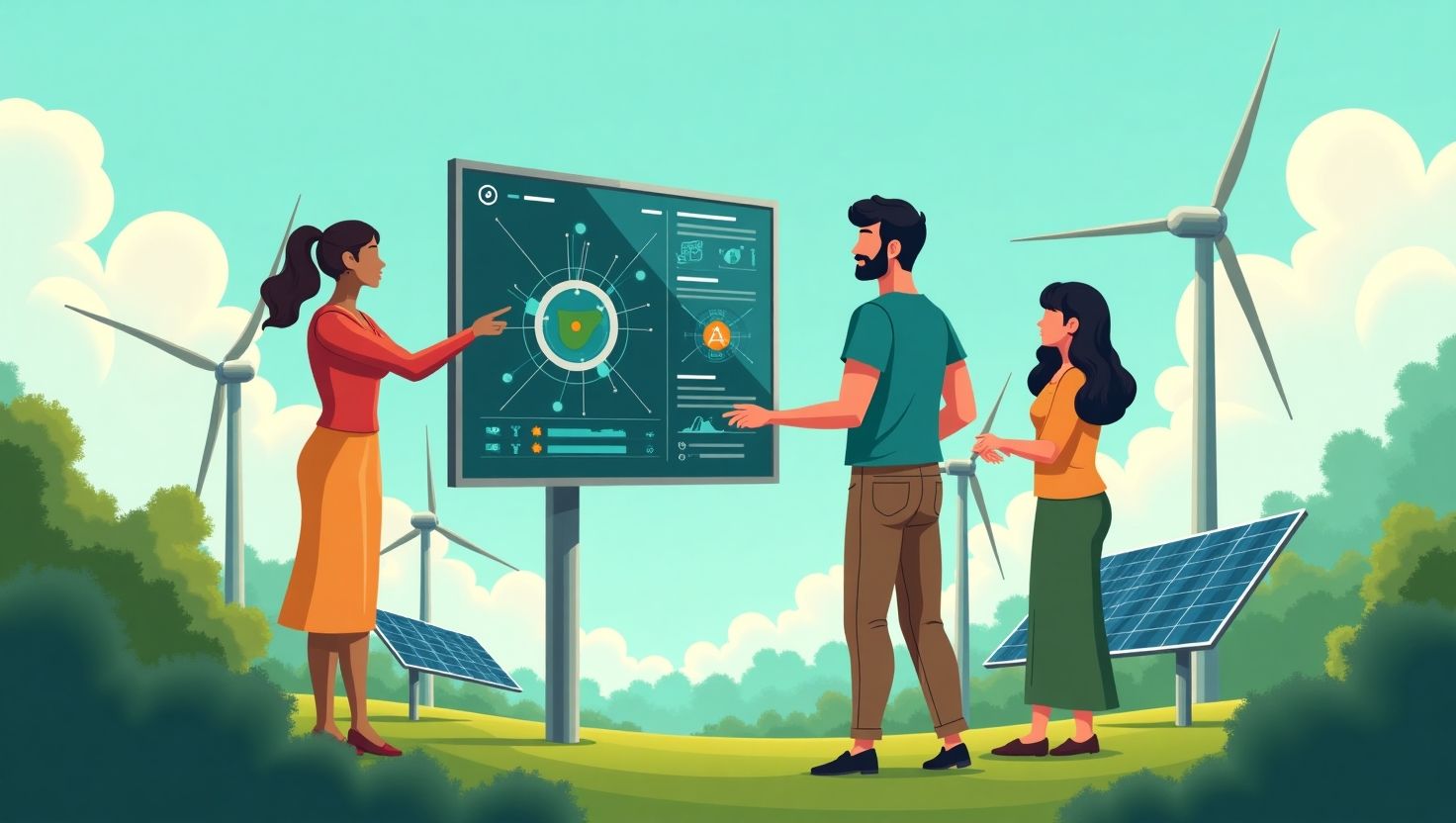
Harnessing AI in Green Energy: A Sustainable Future
Introduction
In the quest for sustainability, harnessing AI in green energy emerges as more than just a forward-thinking initiative; it becomes essential. As we delve into this transformative role, it’s crucial to appreciate how AI is reshaping sustainable technology. Not only does it optimize energy grids, but it also tackles the pervasive issues of climate change.
Let’s explore how Artificial Intelligence—often seen through the lens of futuristic gadgets and smart apps—is akin to the secret ingredient in a recipe for sustainable living. Just as spices enhance the flavor profile of a dish, AI enriches the effectiveness of green solutions, making them smarter and more adaptable to our evolving planet.
Background
Understanding the backdrop against which AI enters the energy sector is key. AI technology, once relegated to sci-fi novels, now plays a pivotal role in various industries, with the energy sector being a standout domain. Initially focused on predictive analytics and automation, AI has gradually expanded its horizons to include energy efficiency improvements and real-time energy consumption management.
The evolution of AI marks a significant turning point for sustainable technology. It equips systems with the ability to foresee energy demands and align them with production capabilities. This not only reduces wastage but also significantly cuts down the energy footprint.
Climate change is undoubtedly one of the most pressing challenges of our time. AI’s ability to integrate with existing energy frameworks provides a flexible, adaptive approach to bolster our fight against ecological and environmental degradation.
Current Trends in AI and Green Energy
Numerous trends have emerged as AI continues to integrate with energy grids. Energy-efficient systems using AI are minimizing the carbon footprint by fine-tuning operations, predicting demand, and adjusting supply accordingly.
For example, in a similar manner to how a GPS optimizes a travel route by anticipating traffic conditions, AI optimizes energy flow across grids by continuously analyzing data to tailor energy distribution, thereby reducing energy loss and enhancing overall performance.
Real-world applications, like Google’s DeepMind project that reduced Google’s data center cooling bill by 40%, reflect the success and potential of AI-driven sustainable technology. Moreover, companies implementing AI in renewable energy sources, such as solar and wind farms, are reporting increased energy capture and reduced operational costs.
Insights from Related Innovations
Innovations in this domain are not without controversy. The case of Stardust Solutions, an Israeli geoengineering startup, is particularly illuminating. It aims to tackle climate change by dispersing reflective particles in the stratosphere—a bold initiative that has sparked as much debate as interest. While Stardust Solutions projects that nations will pay over a billion dollars annually for this service, skepticism persists within the research community regarding the ethics and feasibility of privatized climate intervention (source).
This skepticism underscores a broader dialogue on whether privatized companies should hold the reins of global environmental solutions, highlighting the delicate interplay between innovation and accountability in our climate policies.
Future Forecast: AI’s Role in Sustainable Energy Solutions
Looking ahead, the meteoric rise of AI foreshadows a substantial transformation in the green energy landscape. Improved algorithms and machine learning could soon predict power supply fluctuations with unprecedented accuracy, providing strategies to stabilize energy grids in real-time.
AI’s potential to provide tailored solutions tailored for region-specific climate challenges could drive efficiencies that marry economic growth with sustainability imperatives. Imagine AI systems as skilled conductors in an orchestra, orchestrating an array of renewable energy sources with harmony and precision.
As we edge closer to an era where AI-driven solutions are not just a possibility but a necessity, the potential for profound impact on our global mission to mitigate climate change cannot be overstated.
Call to Action
The exciting convergence of AI and green energy signals a call to action. You are encouraged to immerse yourself deeper into this topic and explore how AI not only informs sustainable technology practices but also shapes the vibrant future of our energy ecosystem. Engage with, support, or initiate community projects that drive our collective mission forward.
By embracing AI in green energy, we each contribute to crafting a world that’s not only smarter but undoubtedly more sustainable. For more insights on this topic, consider exploring more articles on AI’s transformative role in energy innovation and other sustainable practices (source).