
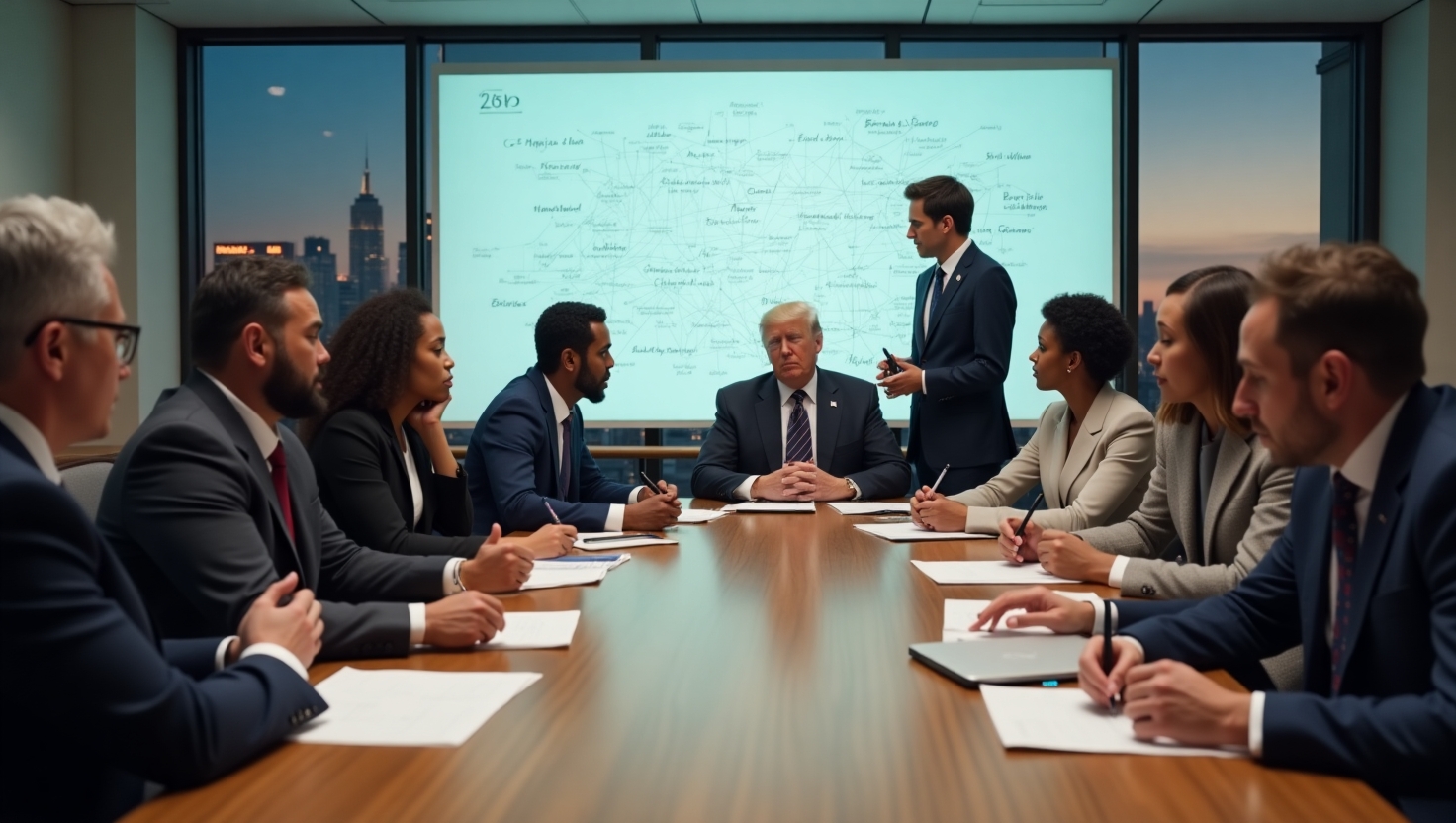
Understanding Trump’s AI Executive Order: A Shift in Federal Policy
Introduction
In an era where artificial intelligence (AI) permeates almost every facet of our daily lives, crafting policies that can keep up with this rapid technological advancement is crucial. On December 11, President Donald Trump took a significant step in this direction by signing an executive order, marking a pivotal change in the United States’ approach to AI regulation. This move aims to streamline AI-related laws at a federal level, reducing the existing labyrinth of state regulations source. As AI continues to evolve, a unified federal policy is more necessary than ever to ensure the U.S. remains at the cutting edge of AI innovation. This blog will delve into the implications of the Trump AI Executive Order, exploring its impact on state regulations, tech companies, and future legislative trends.
Background
Over recent years, the rapid rise of AI technology has profoundly impacted society, revolutionizing everything from healthcare to finance. However, this proliferation has been accompanied by a complex tapestry of state regulations, each with distinct standards and requirements. This patchwork has posed significant challenges for companies operating across multiple states, potentially stifling innovation. Trump’s executive order, titled \”Ensuring a National Policy Framework for Artificial Intelligence,\” aims to dismantle these barriers. The order seeks to create a coherent federal framework that can support AI’s growth while maintaining the nation’s dominance in the field source.
Current Trends in AI Legislation
State regulations on AI have varied greatly, creating disparate landscapes that influence local innovation efforts. While states like California have stringent privacy laws, others like Texas are more lenient, fostering a mixed regulatory environment. This inconsistency has resulted in compliance challenges for companies like Microsoft, Google, and Meta, which operate on a national scale. In contrast, countries such as China adopt a more centralized approach, facilitating rapid AI development. The Trump administration believes that a unified federal policy is essential to keeping America competitive internationally, especially given the global race for AI supremacy.
Furthermore, stakeholders, including tech giants and consumer advocacy groups, express concern over the potential consumer protection issues posed by AI technologies like generative AI systems, which may already violate existing laws. With 42 attorneys general raising alarms over child safety and consumer rights, there is a pressing need for clear and comprehensive regulations that consider both innovation and protection source.
Insight into Federal and State Dynamics
The tension between federal and state regulations is reminiscent of the classic states vs. federal rights debate in the U.S., akin to a parent imposing a curfew on children with different personalities. While a unified federal policy simplifies compliance and can drive national competitiveness, states argue that local nuances and needs might be overlooked. Tech companies provide valuable insights into this debate, often advocating for clarity and uniformity that reduce bureaucratic red tape. However, they also warn that too little regional flexibility might curb localized innovation and responsiveness.
Forecasting the Future of AI under Trump’s Executive Order
Trump’s AI Executive Order could mark a turning point for AI innovation in the U.S., potentially removing obstacles for tech companies to innovate without fearing state-level penalties. However, the transition to a federal-centric regulatory framework could also present challenges. The delicate balance between fostering innovation and safeguarding public interest remains a critical concern. Moving forward, regulatory bodies must work closely with technology companies and other stakeholders to navigate these changes successfully.
As the AI landscape evolves, we anticipate more robust dialogues between federal authorities, state governments, and industry leaders. This will likely result in adaptations to ensure that regulatory measures keep pace with technological advancements without stifling progress or compromising ethical standards.
Call to Action
Staying informed about evolving AI regulations and their implications is essential for businesses and individuals alike. As the landscape continues to shift, understanding the balance between federal policy and state regulations becomes ever more important. We invite our readers to share their opinions on this balance and its potential impact on innovation and safety in the rapidly evolving field of AI.
For those interested in further exploration, consider reading about the executive order aimed at creating a unified federal policy for AI and its implications here.