
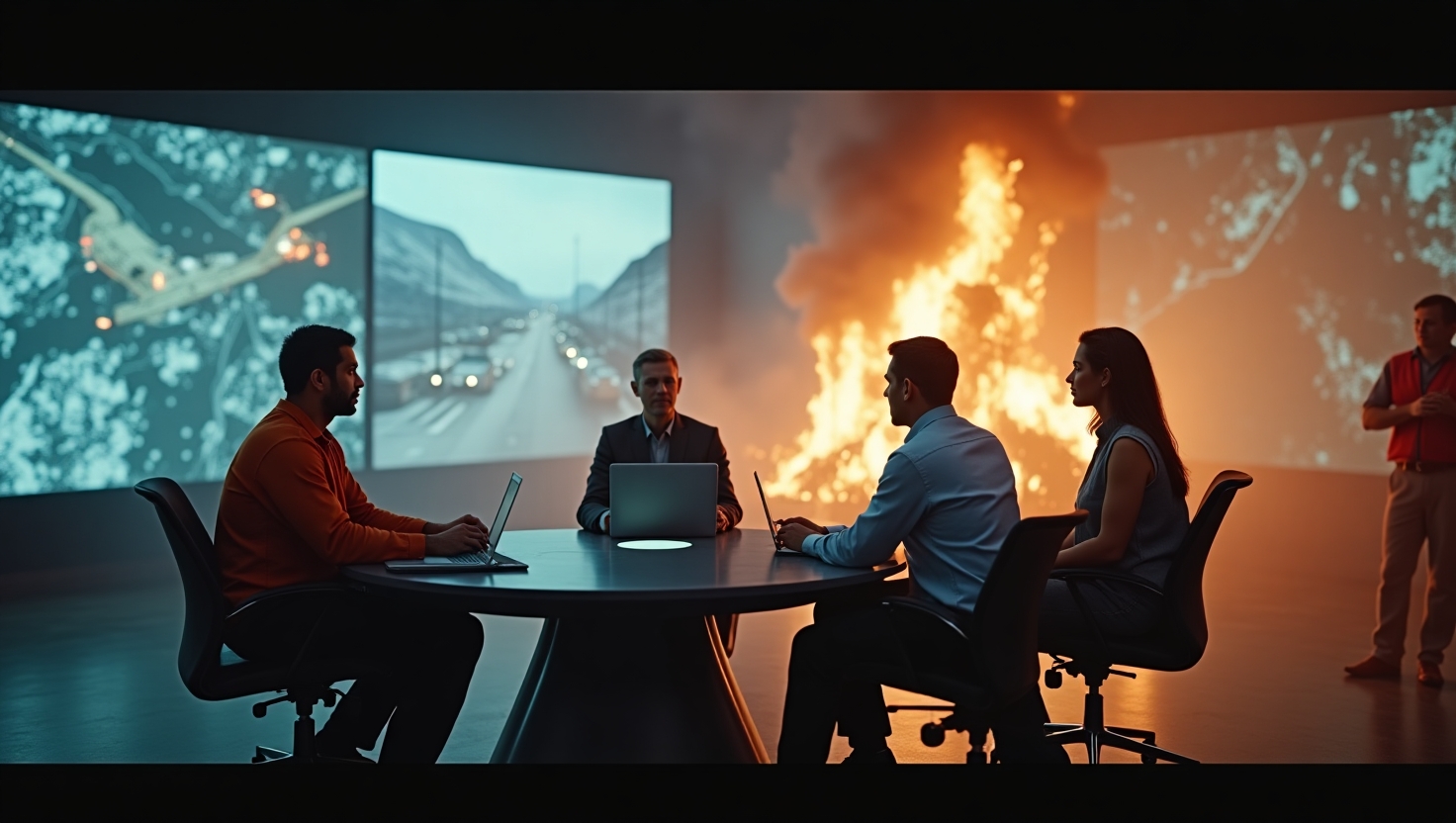
AI Emergency Response: Transforming Public Safety with Innovation
Introduction
In today’s rapidly evolving world, the need for swift and effective emergency response systems has never been more pressing. From natural disasters to urban emergencies, the capacity to respond efficiently can mean the difference between life and death. Enter AI emergency response, a groundbreaking integration of advanced technologies designed to enhance public safety. This innovation promises not only to streamline current processes but also to introduce new capabilities, such as the use of drones in emergencies, that redefine the speed and effectiveness of first responders. Institutions like C-DAC (Centre for Development of Advanced Computing) play a pivotal role in driving these developments forward, pioneering AI innovation and fortifying our communities against imminent threats.
Background
The realm of emergency response has undergone significant transformation over the years. Traditionally reliant on human-led interventions, these systems have witnessed monumental technological shifts, particularly with the aid of AI. C-DAC has been at the forefront of this evolution, significantly contributing to technological advancements in India’s emergency management systems. One example of this is the recent Memorandum of Understanding (MoU) between C-DAC and ideaForge, aimed at integrating drones into emergency responses. This partnership marks a pivotal step in utilizing drones to augment the nation’s emergency handling capabilities.
Drones, once considered the stuff of science fiction, now serve as a tangible solution to longstanding challenges faced by traditional emergency response systems, such as delays and limited situational awareness. The flexibility and mobility of drone technology provide a new avenue for emergency services to traverse difficult terrains and deliver critical assistance faster.
Trend
The surge in AI innovations naturally spills into the domain of public safety, offering transformative solutions for age-old problems. Recent data underscores the increased effectiveness of drones, which can reduce emergency response times drastically compared to conventional methods. Reports attest to drones’ ability to reach disaster zones swiftly, offering real-time insights that significantly amplify on-ground efforts.
Credible sources argue the benefits of drones in emergencies extend beyond speed. For instance, in forest fire scenarios, drones equipped with thermal imaging can penetrate smoke to locate heat sources, a task challenging for manned aircraft. According to a source from Analytics India Magazine, integrating FLYGHT drone networks with C-DAC’s Emergency Response Support System (ERSS) is a step towards reducing response times, providing rapid situational awareness, and assisting in decision-making under pressure.
Insight
The integration of drones in emergencies bolstered by AI underlines a shift towards faster, data-driven decision-making. Take the C-DAC and ideaForge partnership — this collaboration leverages drones to gather data quickly, thus enabling first responders to allocate resources efficiently and tackle crises head-on. However, this innovation comes with its own set of challenges, including public perception and regulatory hurdles concerning drone usage. Concerns about privacy and airspace safety need addressing to ensure such technologies gain wider acceptance.
Forecast
Looking ahead, the landscape for AI emergency response technologies promises exciting possibilities. We anticipate further advances in drone technology, with even more sophisticated AI integrations enabling predictive analytics for emergencies. Future developments might involve drones that autonomously coordinate with AI systems to predict disaster impacts, thus enabling preventative strategies rather than reactive approaches.
Moreover, as the technology matures, emergency response frameworks are likely to see a paradigm shift. Imagine a world where first responders receive live data feeds from drones already flying over emergent situations. This capability could allow responders to understand the magnitude and dynamics of events long before they physically arrive, crafting strategic plans while en route.
Call to Action
Stay informed about the evolving world of AI and drone technology in emergency response by engaging with key publications and expert discussions. Sharing insights and educating peers on these innovations is paramount for public safety advancements. We encourage you to explore related articles on this subject, such as C-DAC’s collaboration with ideaForge, to better understand the futuristic implications these technologies harbor. Engage in discussions on social media to catalyze a broader conversation on leveraging AI for societal benefit.
Take a moment to read more about C-DAC and ideaForge’s groundbreaking MoU here. Engaging with this content allows us to collectively shape the future of emergency response through AI innovation and public safety.