
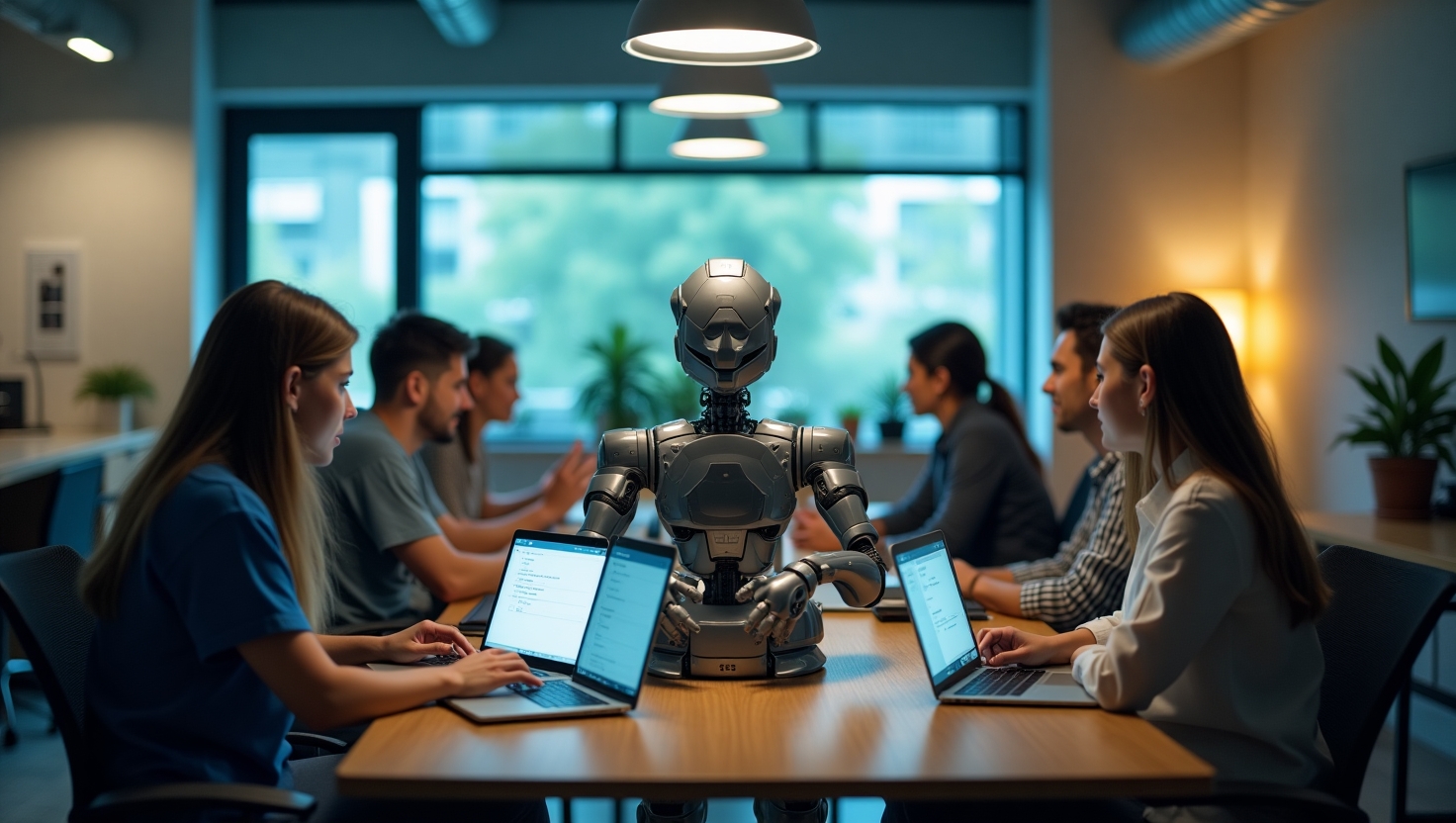
The Future of AI Freelance Work: Opportunities and Limitations
Introduction
The landscape of work is undergoing a seismic shift, largely driven by the rapid evolution of technology. One of the most intriguing developments is AI Freelance Work, a burgeoning avenue in today’s gig economy where artificial intelligence (AI) agents play a pivotal role. As businesses and freelancers continually seek efficiency and competitive edges, the introduction of AI agents into freelance work has sparked both anticipation and anxiety. These AI-driven tools promise potential automation of tasks traditionally managed by human freelancers, yet their current capabilities and limitations present a complex picture of the future.
Background
AI’s foray into freelance automation has been both swift and impactful. The use of AI Agents in the gig economy is a prime example, with entrepreneurs exploring how technology can transform traditionally human-dependent tasks. AI agents are designed to execute specific functions, ranging from simple data entry to complex analytical tasks, thereby potentially redefining freelance work. This movement is underpinned by the rise of Freelance Automation, where technology optimizes task management, supposedly enhancing productivity.
The Remote Labor Index, an innovative metric developed by Scale AI and the Center for AI Safety, aims to quantify AI efficacy in automating freelance tasks. This index, part of a comprehensive study, provides a glimpse into AI’s potential — and current shortcomings. The report highlights that while improvements in AI are evident, limitations persist, suggesting that AI is not poised to replace humans in the freelance sector imminently. Source
Trend
Trends within AI’s application in freelancing reveal mixed results. While some AI agents excel at certain tasks, their overall completion rate remains modest. According to the aforementioned study, top AI agents could complete less than 3% of freelance tasks, earning a mere $1,810 from a possible $143,991. These figures starkly highlight the existing capabilities and economic impact of AI agents in freelancing.
These trends suggest that businesses may view AI agents as supplementary instead of outright replacements for human freelancers at this stage. This coexistence between human and machine within the gig economy showcases both opportunity and limitation.
Insight
Expert Voices like Dan Hendrycks and Beth Galetti provide valuable insights into AI’s current limitations. Hendrycks emphasizes the technological gap that exists despite advancements, noting that while AI can perform specific tasks well, it struggles with others requiring nuanced human judgment. Beth Galetti aptly describes this generation of AI as \”the most transformative technology we’ve seen since the Internet,\” yet this transformation remains incomplete. Source
Even as AI evolves, its potential to alter the freelance landscape is immense. By relieving freelancers from repetitive tasks, AI has the potential to afford them the time and bandwidth to focus on creative and strategic aspects of work that require a human touch.
Forecast
Looking forward, the trajectory of AI in freelance work is likely to be marked by both advances and debates. On one hand, as AI agents improve, their scope of work will undoubtedly expand, bringing more tasks under the umbrella of Freelance Automation. Yet, this evolution will accompany ongoing discussions about the impact on human jobs in the gig economy.
Predictions by industry figures like Dario Amodei foretell scenarios where AI could automate up to 90% of coding tasks within months, painting a picture of a future where AI’s role is significantly increased. However, with this advancement comes the responsibility of addressing ethical concerns and ensuring that human skills remain relevant and valued in the workforce.
Call to Action
As AI continues its incursion into freelancing, staying informed is crucial. Freelancers and businesses alike must keep abreast of technological developments to adapt and thrive. Practical steps for freelancers include honing complementary skills that AI cannot replicate and leveraging technology to enhance productivity.
For those looking to delve deeper, check out the Wired article which expands on the broader conversations surrounding AI agents and their place within freelancing. As the lines between human and machine blur in the gig economy, understanding AI’s opportunities and limitations becomes not just an educational pursuit but a professional imperative.