
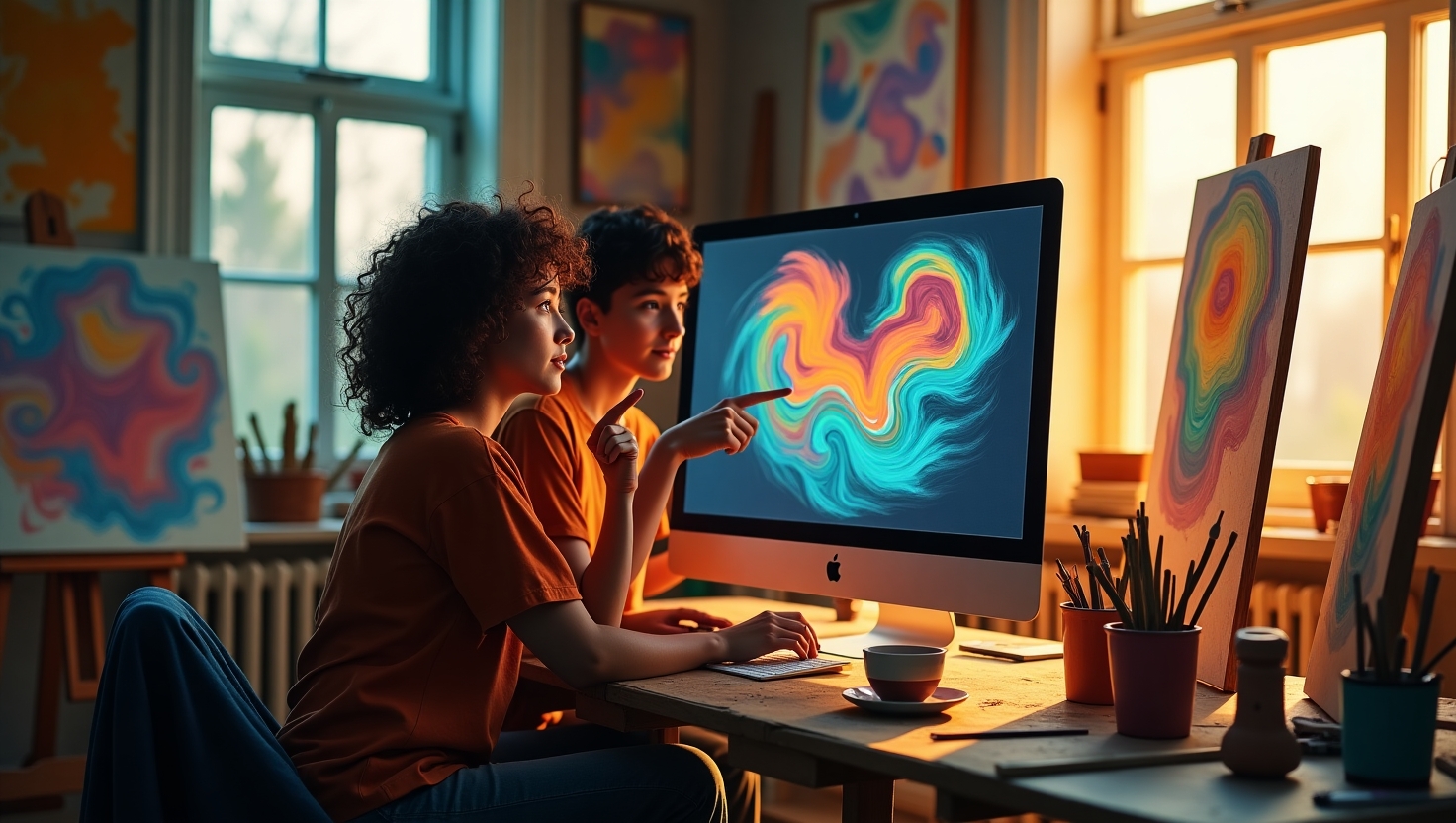
AI in Creative Industries
Introduction
The crescendo of artificial intelligence’s influence reverberates across industries, none perhaps more surprisingly than the creative sectors. As we engage with technologies like Generative AI, we find traditional creative processes—once considered the sacred realm of human intellect and emotion—transformed and reshaped in ways that provoke a mix of awe and existential dread. AI in Creative Industries is not just a passing phase; it’s a paradigm shift, challenging the very essence of artistic expressions and the methodologies behind them. It’s time to scrutinize whether these AI applications are breathing new life into creativity or threatening to strip it of its authenticity.
Background
AI’s inception in creative fields wasn’t an overnight occurrence. It started modestly, with basic algorithms assisting tasks like color correction or simple design automations. Fast forward to today, and you witness a revolution—AI Creative Tools like Adobe Sensei and DeepArt have evolved, spawning complex uses that allow artists, marketers, and content creators to transcend traditional limitations. AI Content Creation platforms and Generative AI models now write poetry, compose symphonies, and even paint visual masterpieces, blurring the lines between human craft and algorithmic assistance. This movement towards integration raises one vital question: Are these AI tools an enabling force or a dire omen for human creativity?
Current Trends
Today’s trends reveal an intoxicating fusion where Art and AI converge, creating works previously unimaginable. AI’s application in producing generative art marks a watershed moment; artists are no longer sole custodians of their creative legacies, wrestling with algorithms that learn, adapt, and sometimes, outperform human ingenuity. Platforms like OpenAI’s GPT and IBM’s Watson serve as virtual scaffolds for building AI-mediated experiences, offering AI Content Creation capabilities that are redefining marketing strategies and artistic productions alike.
Yet, this emerging synergy isn’t without its skeptics. Some caution about the over-reliance on AI, akin to a financial advisor gambling unrestricted with a company’s fiscal health. Articles have metaphorically branded certain technologies as \”Diablo AI,\” preying on business marketing budgets, potentially leading to financial ruin (source). It’s a provocative warning, suggesting that what AI builds with one hand, it could devastate with the other if left unchecked.
Key Insights
Industry experts marvel at AI’s potential but also issue stark caveats. Incorporating AI into artistic workflows can lead to unprecedented outputs, yet the creeping efficiency of these tools poses threats to individual creativity. Maks Shev, in a daring critique, argues that \”Diablo AI\” could indeed \”destroy your marketing budget and business\”, urging businesses to question and critically evaluate the avenues AI carves (source).
On one end, AI democratizes creativity, making potent tools accessible to the masses. However, it also risks creating homogenized outputs, where ‘epoch-making’ work becomes formulaic. The ‘unique human touch’ that once defined art and marketing may dissipate into a sea of algorithmically generated sameness.
Future Forecast
The future of AI in Creative Industries promises both evolution and revolution. Speculation is rife with the dawn of applications not yet dreamt, wherein AI might autonomously sculpt, narrate, or even orchestrate entire artistic movements. But what does this mean for futuristic creativity? Are artists doomed to become puppet-masters holding the strings to unwieldy, autonomous AI marionettes?
Forecasts suggest a dichotomy of outcomes: while AI could reduce costs and unlock creative potential for businesses, its unchecked deployment might stifle genuine innovation. Artists and enterprises must navigate this delicate balance, critically engaging with AI’s offerings, ensuring that their authenticity is neither compromised nor obscured by the seductive precision of algorithms.
Conclusion and Call to Action
As these technologies continue to develop, it’s imperative for creators and businesses to educate themselves about the evolving role of AI in artistic realms. We must confront these provocative questions: Are we architects of a brave new creative world, or will we become complacent passengers along an AI-driven narrative? Stay informed, critically evaluate, and not allow AI to write the final word in creativity. Join our conversation and subscribe for more penetrating insights into the intricate dance between technology and artistry.