
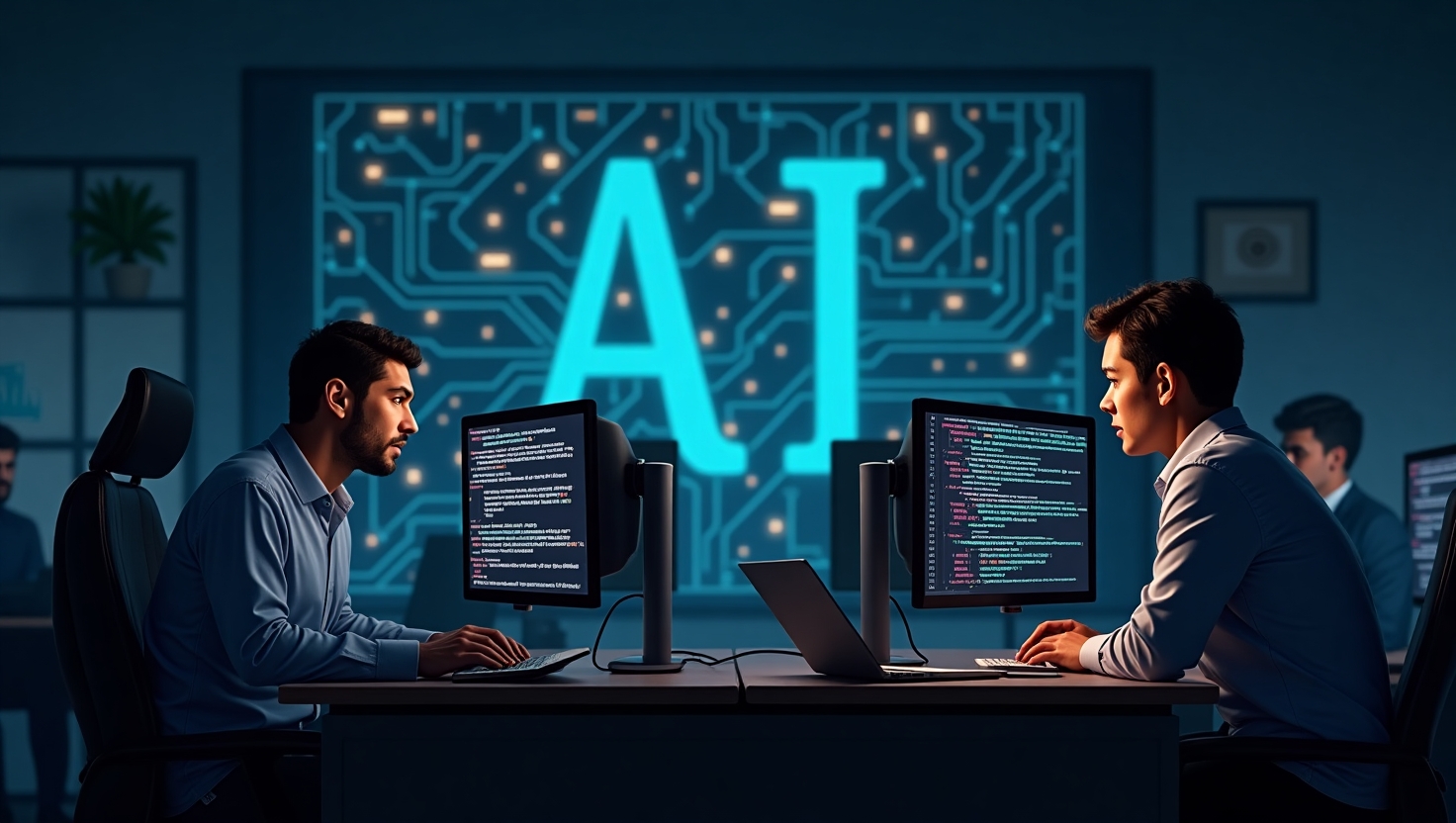
The Evolving Role of AI in Competitive Programming
Introduction
In an era where technology continuously pushes boundaries, the integration of AI in competitive programming is not merely a trend—it’s a revolution. As artificial intelligence becomes entwined with the frameworks of coding contests, it ushers in a new chapter that is as controversial as it is captivating. The once-clear lines between human intellect and artificial prowess are blurring, raising crucial questions about fairness, ethics, and the future of coding competitions. Let’s delve into this transformative shift and explore the provocative implications of AI’s rise in this dynamic field.
Background
The fusion of AI technologies into competitive programming is not just a technical evolution—it’s a cultural shift with significant ethical ramifications. Historically, competitive programming has been a bastion of human intellect, a platform where coders showcase their problem-solving prowess. However, the introduction of AI tools has sparked a burgeoning narrative around cheating in contests. The use of AI can be likened to a genie out of the bottle, with contestants harnessing its power for advantages that traditional rules didn’t anticipate.
Initial reactions to these developments were mixed. Some welcomed AI as a tool of empowerment, enhancing learning and efficiency, while others viewed it as an unwelcome intruder, threatening the foundation of fair competition. The ethical implications are manifold. How do we draw the line between assistance and cheating? As AI becomes a fixture in these environments, the need for an ethical framework becomes imperative.
Trend
At the forefront of AI-influenced changes in competitive programming is the remarkable LLM impact. Large Language Models like GPT are reshaping the landscape by providing coders with unprecedented support. Imagine a seasoned chess player using a supercomputer’s hints during a match—that’s the kind of advantage AI tools offer. This shift challenges the integrity of what coding contests traditionally represent.
Statistics depict a sharp increase in AI usage across contests. A report from Our AI highlights that coding contests are being transformed by AI technologies, with participants leveraging AI to solve complex problems faster than ever before (source). This raises questions about the very fabric of these competitions. Can they maintain their essence when a piece of code potentially wields more intelligence than the coders themselves?
Insight
The integration of AI in coding contests necessitates robust guardrails, akin to those implemented in other industries dealing with transformative technologies. The ethics of AI usage demand that regulators develop a framework that addresses potential biases in AI outputs and encourages responsible AI usage. The insights from GuardrailsAI reveal that creating a reliable and ethical AI ecosystem requires not just technical adjustments but a fundamental shift in oversight and development practices (source).
The key lies in learning from other fields where AI has achieved significant integration yet remains under rigorous ethical scrutiny. For instance, in healthcare, AI-driven diagnostics are subjected to stringent standards, ensuring fidelity and trust. Similarly, competitive programming needs a structured approach to balance AI capabilities with ethical standards to maintain competition integrity.
Forecast
Looking forward, the trajectory of AI in competitive programming suggests that contests may evolve to either embrace AI integration or enforce stringent restrictions to maintain traditional integrity. Predictions indicate that competitions might incorporate AI-focused tasks where the challenge shifts from problem-solving to effectively using AI tools. Alternatively, contest structures could be adapted to include AI-free zones, preserving the purity of human creativity.
As we forecast the participant experience and the very structure of coding contests, it’s plausible that regulatory measures will become indispensable, akin to doping regulations in sports. These adaptations aim to level the playing field, ensuring that AI enhances rather than diminishes the spirit of competition.
Call to Action
In this era of rapid technological change, it is crucial for participants, organizers, and tech enthusiasts alike to engage with AI responsibly. We must advocate for sustained discussions on ethics in AI within coding competitions. By subscribing to updates and joining communities focused on ethical programming practices, we contribute to shaping a future where innovation and integrity coexist.
For more insights, explore related discussions on AI’s diminishing fairness in coding competitions and the importance of guardrails in AI applications through these articles:
– The End of Fair Play in Coding Contests
– Guardrails in LLM
As we navigate these uncharted waters, let’s prioritize responsible AI engagement and champion ethics as we witness the evolution of competitive programming.